


Diamond Shapes Explained: How Shape Changes Sparkle, Size, and Price

The short version: Diamond shape changes the face-up outline, perceived size, setting needs, and often price. Facet style changes the visual character: brilliant cuts emphasize sparkle, while step cuts create broad flashes and a hall-of-mirrors look. Elongated ovals, pears, and marquises can appear larger per carat, but proportions and cut quality matter more than the shape name.
Carat tells you weight, not the size your eye sees. Two one-carat diamonds can have different length, width, depth, outline, and light performance. Shape is therefore both a style decision and a way to allocate a budget among spread, sparkle, color, clarity, rarity, and setting.
What is the difference between diamond shape and cut?
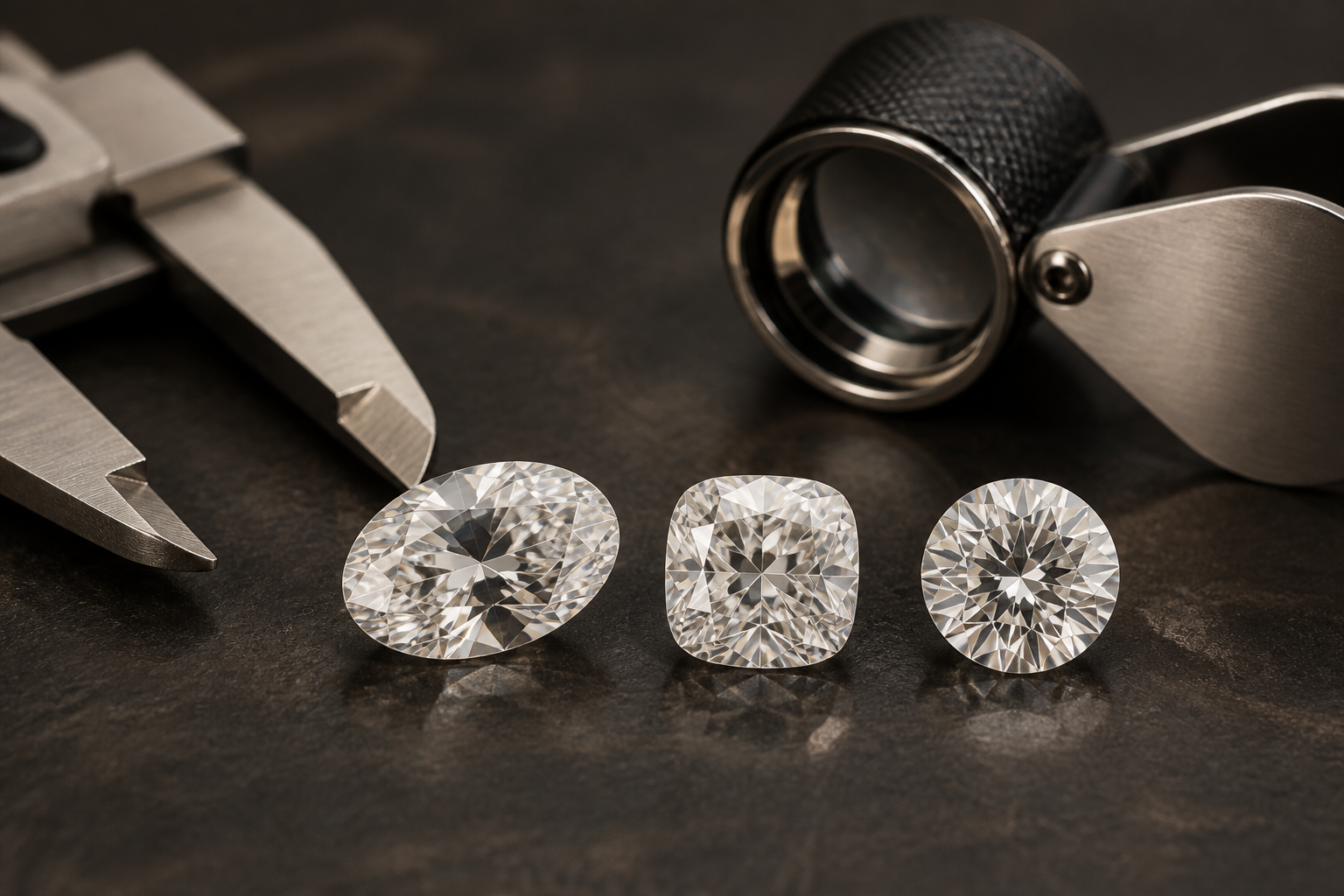
Shape is the face-up outline: round, oval, cushion, emerald, pear, marquise, princess, radiant, Asscher, or heart. Cut style is the arrangement and angle of the facets. Brilliant styles use many triangular and kite-shaped facets for brightness, fire, and scintillation. Step cuts use long parallel facets for broad flashes and an architectural hall-of-mirrors effect.
GIA gives an overall cut grade only to standard round brilliant diamonds in the D-to-Z color range. Fancy shapes require closer visual comparison of outline, symmetry, proportions, bow-tie, light return, and setting fit.
Which diamond shape sparkles the most?
A well-cut round brilliant is the benchmark for brightness and is designed around a highly studied facet pattern. Oval, pear, marquise, radiant, and princess diamonds can also show strong brilliant-style sparkle. Emerald and Asscher cuts emphasize clean broad flashes rather than the busy scintillation of a round.
Shape alone does not guarantee sparkle. A poorly proportioned round can look dull, while an excellent oval or radiant can be lively. GIA defines diamond light performance through brilliance, fire, and scintillation, all of which depend on facet design and execution.
How do popular diamond shapes compare?
| Shape | How it looks | What to inspect |
|---|---|---|
| Round brilliant | Maximum classic brightness and a symmetrical outline | GIA cut grade, diameter, pattern, fire, and scintillation |
| Oval | Elongated, bright, and often larger-looking per carat | Bow-tie darkness, symmetry, outline, and length-to-width preference |
| Cushion | Soft square or rectangle with rounded corners | Face-up spread, facet pattern, depth, and square versus elongated shape |
| Emerald | Clean step-cut lines and broad flashes | Clarity, color, windowing, symmetry, and pleasing hall-of-mirrors pattern |
| Pear | Teardrop outline that lengthens the finger | Centered point, balanced shoulders, bow-tie, and protective tip setting |
| Marquise | Long, dramatic outline with high visual spread | Symmetry, bow-tie, pointed-end protection, and length-to-width ratio |
| Radiant | Rectangular or square outline with brilliant sparkle | Corner balance, crushed-ice versus defined pattern, color, and spread |
| Princess | Modern square brilliant with sharp corners | Even pattern, corner protection, symmetry, and setting clearance |
Which diamond shape looks biggest for its carat weight?
Elongated shapes such as oval, marquise, and pear can create the impression of greater size because they cover more length across the finger. GIA cautions that shape does not guarantee a larger appearance. Depth, girdle, cut style, outline, and actual millimeter measurements determine face-up spread.
How does diamond shape affect price?
Round brilliants are often the most expensive shape at otherwise similar quality because of demand and the amount of rough crystal removed during cutting. Fancy shapes such as oval, cushion, or princess can sometimes offer more face-up impact for the budget. There are exceptions: an unusually fine, rare, or highly desirable fancy shape can command a premium.
Price also jumps near “magic” carat thresholds such as 1.00 and 1.50 carats. A well-proportioned diamond just below a threshold can look nearly the same size while costing less. Compare millimeter dimensions and visual performance, not carat alone.
Do fancy-shaped diamonds hide color or inclusions differently?
Yes. Busy brilliant facet patterns can make some inclusions less obvious, while the long open facets of emerald and Asscher cuts reveal clarity more readily. Fancy shapes can also concentrate color at points or ends. Grade is important, but the stone should be inspected face-up in more than one lighting condition.
What should you ask before choosing a diamond shape?
- What are the exact length, width, and depth measurements?
- How does the stone perform in diffuse office light, spot light, and daylight?
- Is there a dark or distracting bow-tie?
- Does the outline look balanced, or are the shoulders flat or bulging?
- Which corners or points need protective prongs or a bezel?
- How will the shape sit with the planned wedding band?
- Does the grading report match the stone and disclose the 4Cs and measurements?
The best diamond shape is the one whose light pattern, outline, scale, and setting make sense together on the wearer’s hand.
Where can you compare diamond shapes in Dallas?
Skibell Fine Jewelry can compare loose diamonds and settings side by side, explain grading reports, and build a custom design around the selected stone. Browse the bridal collection or schedule a private Preston Road appointment.
Sources
- GIA, 2025 guide to diamond shapes, cut styles, sparkle, perceived size, and settings.
- GIA, brilliance, fire, scintillation, and the difference between shape and cut.
- GIA, shape, carat thresholds, and engagement-ring pricing factors.
- GIA, how to read a diamond grading report.
- Skibell Fine Jewelry, bridal and engagement-ring collection.