


Bezel vs. Prong Settings: Which Engagement Ring Fits Your Daily Life?

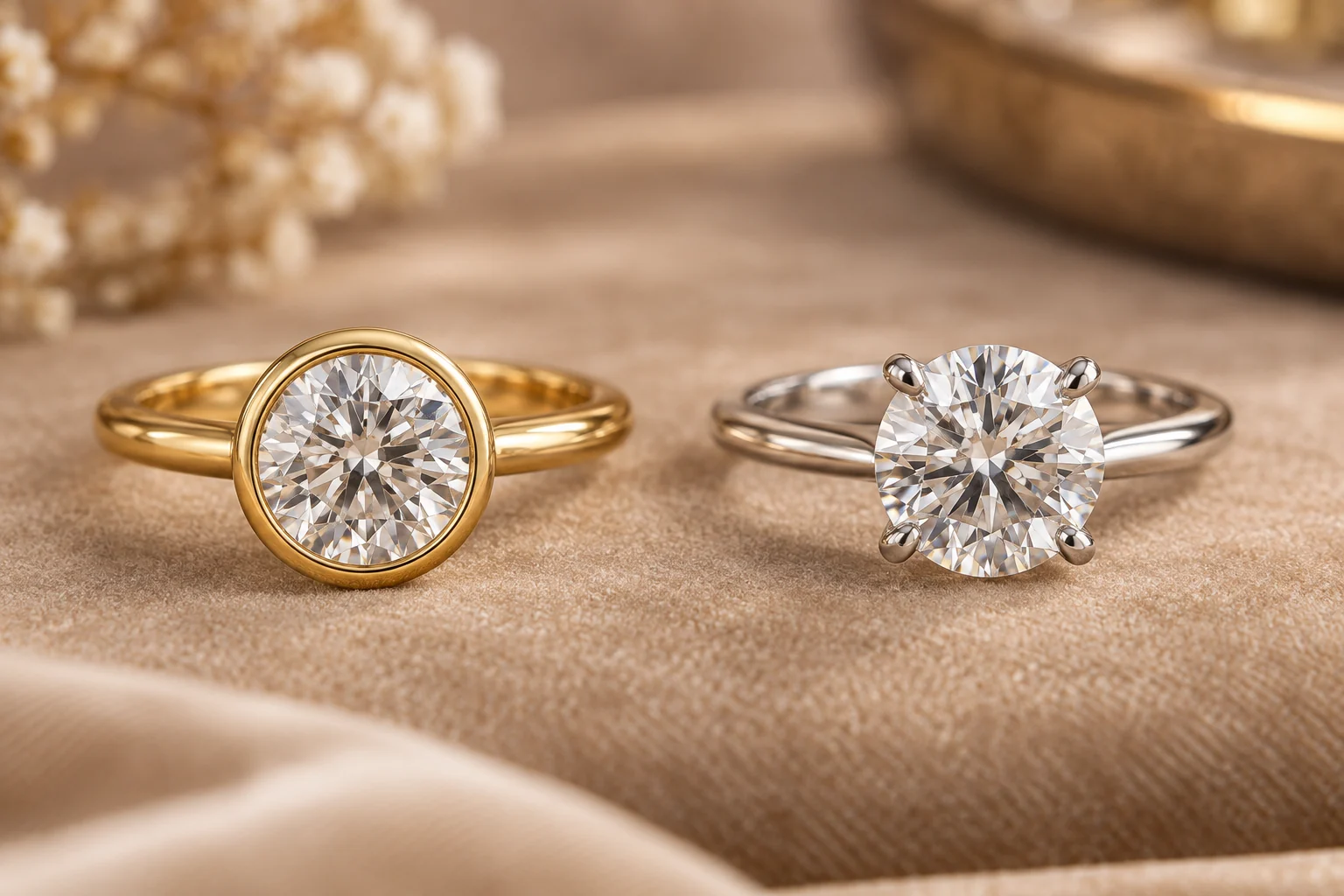
The short version: A bezel wraps metal around the stone's edge and can suit someone who wants a smoother, lower-snag profile. Prongs expose more of the stone and offer a classic open look, but their condition needs regular attention. Neither setting is damage-proof. Choose around the exact stone, desired appearance, and the wearer's daily routine.
The same diamond can feel very different in a low bezel and a tall prong setting. The decision is practical as well as visual: think about gloves, pockets, hobbies, cleaning, and how much of the stone the wearer wants to see.
What is the difference between a bezel and prongs?
A bezel is a metal rim that secures some or all of the stone's perimeter. Prongs are individual metal tips that hold the stone at selected points. GIA describes both as setting types, distinct from styles such as solitaire or halo. The final profile depends on more than the setting name: stone shape, metal thickness, height, and basket design all change the result.
Which setting is easier to live with?
| Priority | Bezel | Prongs |
|---|---|---|
| Edge protection | Metal covers more of the girdle | Stone edge remains more exposed between tips |
| Snagging | Often a smoother profile | Raised or worn tips can catch fabric |
| Stone visibility | More metal visible around the stone | More of the stone's sides can be seen |
| Maintenance | Still needs inspections | Prongs need close attention for wear or movement |
GIA points to bezel settings for added edge protection, but no ring can make a gemstone immune to impact. A low, well-made prong setting may also suit an active wearer better than a tall or delicate design.
Does a bezel make a diamond look smaller?
A full bezel shows less of the stone's outline than a minimal prong setting, so some people perceive a smaller face-up look. Others like the clean frame and contrast. Compare the same size and shape in both settings under ordinary light rather than relying on a photograph.
What if you want to use an inherited stone?
Have the stone examined before choosing the setting. Its exact measurements, condition, and vulnerable points should guide the design. An existing chip or a pointed fancy shape can change how the edge should be protected. Skibell offers custom design and redesign; its previously confirmed custom production period is six to eight weeks after final design approval, with consultation and stone evaluation before that stage.
How do you choose in person?
Try on rings with both profiles, then test how they pass through sleeves and gloves. Ask to compare cleaning access, stone security, and future service. Explore Skibell's bridal collection and book a Dallas appointment to work through the details with the actual stone or design.